When Your Design Needs to Bite: Unleashing the Silas Typeface
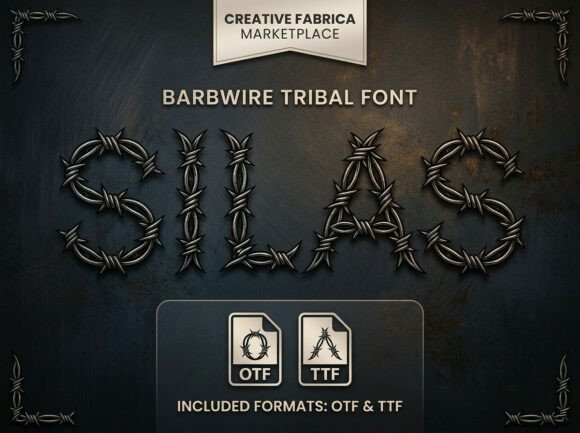
There are moments in design where subtlety is the enemy. You aren’t trying to whisper to your audience; you are trying to grab them by the collar. Whether you are laying out a flyer for a warehouse rave, branding a custom motorcycle shop, or creating a logo for an extreme sports team, you need typography that feels dangerous. Enter Silas, a high-impact barbwire tribal font that doesn’t just sit on the page—it threatens to tear through it. This isn’t your standard vector art; this is a display typeface meticulously constructed to look like twisted metal wire and lethal thorns, offering a visceral, "industrial-renegade" aesthetic that is hard to ignore.
The Anatomy of Industrial Edge
What separates a standard "grunge" font from something like Silas is the level of detail in the texture. Many distressed fonts rely on simple overlays or roughened edges to simulate decay. Silas, however, takes a different approach by mimicking the structural integrity of actual barbed wire. The letterforms are built from the ground up with a "sharp-edged" aesthetic. You can almost feel the cold steel and the prick of the thorns just by looking at it.
This specific visual language taps into a raw, aggressive emotion. It speaks to resilience, toughness, and a refusal to conform. For a graphic designer, this font is a specialized tool. It acts as a visual shorthand for danger or rebellion. If you are working on a movie poster for a horror film or a survival game, the typography does half the heavy lifting for the mood. It instantly signals to the viewer that the content is intense, gritty, and unapologetic.
Strategic Applications: Where Sharp Edges Belong
Understanding where to deploy a heavy-hitting display font like this is crucial for maintaining design integrity. Because of its aggressive texture, Silas is best used for headlines, logos, and short bursts of text where impact is more important than long-form readability. It is a premium font choice for specific niches where "pretty" or "corporate" just won't cut it.
Here are some practical scenarios where this typeface shines:
- Underground Music & Events: From techno festivals to heavy metal gigs, the aesthetic of the event needs to match the sound. Silas works perfectly for main stage headers on posters and social media event pages.
- Streetwear & Apparel: The fashion industry, particularly independent streetwear brands, thrives on bold graphic statements. Using this font for a chest print or a sleeve graphic adds an instant "urban survival" vibe to t-shirts and hoodies.
- Automotive & Motorsport: Custom car garages, drifting teams, and off-road accessories often need branding that implies speed and ruggedness. Silas fits right in on decals, shop signage, and merchandise.
- Gaming & Esports: For clan logos, stream overlays, or tournament branding, a font that looks like it was forged in metal provides a competitive, high-stakes atmosphere.
Mastering the Art of Font Pairing
One of the biggest mistakes designers make with high-concept display fonts is trying to use them for everything. If you set your entire body copy in Silas, your audience won't be able to read a thing, and the visual noise will become exhausting. The power of this typeface lies in contrast.
To make Silas work in a professional layout, you need to pair it with something clean and stable. Think of it as the "loud" element in a conversation that needs a "calm" element to be understood.
- With Sans Serif Fonts: Pairing Silas with a clean, geometric sans-serif font (like a modern sans) creates a fantastic balance. The simplicity of the body text allows the complex, twisted metal texture of the header to stand out without competing for attention.
- With Monospaced Fonts: If you are going for a "hacker" or "industrial" vibe, mixing Silas with a technical monospaced typeface can reinforce the mechanical theme while ensuring the paragraphs remain legible.
- Spacing is Key: Because of the thorny texture of the letters, you need to be mindful of tracking (letter spacing). Sometimes, increasing the tracking slightly on headlines allows the individual shapes of the wire to breathe, preventing the text from looking like a solid black blob from a distance.
Readability and Visual Hierarchy
While Silas is visually arresting, it demands respect regarding scale. This is a typeface designed for large displays. When used on a poster or a website hero image, it should be scaled up significantly. At small sizes, the intricate details of the barbwire construction can get muddy, turning the text into an unreadable mess.
Use this font to establish your hierarchy. It is the anchor of your design. For example, on a gig poster, the band name or the headline act should be in Silas. The supporting acts, the date, and the venue details should be in a standard serif or sans-serif font. This guides the viewer's eye naturally from the most exciting element (the sharp, edgy headline) to the necessary information (the details).
Commercial Considerations and Licensing
When you are working on a commercial project—whether it’s a logo for a client or merchandise for your own shop—licensing is non-negotiable. As a designer or business owner, you need to ensure that the creative assets you use are cleared for commercial use. Silas is a commercial font, meaning you are paying for the legal right to use those unique designs in products that generate revenue.
Before finalizing a project, always double-check the license agreement. Does it cover the number of users in your agency? Does it cover the production of physical goods like t-shirts? Does it cover digital distribution for an app or a game? Treating typography as a serious business asset protects you legally and ensures that your brand identity remains unique. You don't want to build a streetwear empire only to find out a hundred other brands are using a free, pirated version of the same font.
Breaking the Mold with Texture
In a world flooded with smooth, rounded, "friendly" typography, choosing a font with a sharp-edged, aggressive texture is a statement of intent. It tells your audience that you aren't following the mainstream trends. It suggests a brand identity that is rugged, authentic, and perhaps a little dangerous.
Whether you are designing a header for a cinematic "grunge-survival" social media campaign or packaging for a product that promises extreme durability, the visual weight of Silas carries a promise of quality and intensity. It transforms standard text into a visual experience. By embracing this industrial soul and pairing it thoughtfully with cleaner elements, you can create designs that don't just get seen—they leave a mark.